
10 Knee Strengthening Exercises for Runners

Knee pain is the most common running injury, accounting for 28% of all cases. The good news is that targeted knee strengthening exercises can reduce your risk, improve your performance, and keep you running stronger for longer.
Key Takeaways
• Runner's knee (patellofemoral pain syndrome) accounts for 28% of all running injuries.
• Weak muscles around the knees increase injury risk significantly.
• Perform knee strengthening exercises 2 to 3 times per week for best results.
• Strong glutes, quads, and hamstrings reduce stress on the knee joint.
• Gradually increase running mileage by no more than 10% weekly to prevent overuse injuries.
• Proper footwear reduces stress on the knees while running.
What Is Runner's Knee?
Runner's knee is the common name for patellofemoral pain syndrome, a condition that causes pain around or just behind the kneecap. It is the single most common running injury, accounting for roughly 28% of all cases. If you have ever felt a dull ache behind the kneecap after a long run, a sharp twinge on the stairs, or had to cut back your mileage because your knees could not keep up, you are already familiar with it.
Runner's knee develops when the patella (kneecap) does not track properly over the thigh bone, creating friction and irritation in the knee joint. The most common contributing factors are weak or imbalanced muscles around the knees, hips, and core; increasing running volume too quickly; wearing footwear that does not suit your running style; and poor running technique.
Runner's knee exercises that target the quads, glutes, hamstrings, and hip muscles are the most effective long-term solution. Building strength in these areas means your muscles absorb more of the load when you run, reducing pressure on the knee joint and preventing the kind of knee strain that sidelines so many runners.

How Do Runners Strengthen Their Knees?
Runners should focus on building strong quadriceps, hamstrings, glutes, and hip muscles. These muscle groups work together to stabilise the knee joint during every footstrike and push-off. When any one of them is weak or imbalanced, the knee joint takes on extra load, increasing the risk of runner's knee and other overuse injuries.
The best approach combines knee-strengthening exercises with gradual increases in running mileage and attention to running form. Knee strengthening exercises should be done 2 to 3 times per week, ideally on days when you are not doing long runs. Start with bodyweight versions of each exercise, then gradually increase difficulty or resistance over time.
Warm-up exercises are essential before performing knee-strengthening routines. A five-minute walk or light jog, combined with leg swings and hip circles, prepares the muscles and connective tissue around the knee joint for more demanding work. Never skip the warm-up when experiencing knee pain or returning from a period of rest.
What Is the Number One Mistake for Bad Knees?
The single biggest mistake runners make is increasing mileage too fast. The 10% rule exists for good reason: your muscles, tendons, and connective tissue need time to adapt to the demands of running. When you ramp up distance or intensity too quickly, the structures around the knee joint cannot keep pace, and overuse injuries like runner's knee are the result.
A close second is neglecting strength training altogether. Many runners focus exclusively on miles and ignore the knee exercises and lower body strengthening work that would protect their knees in the long run. Building a strong quadriceps reduces stress on the knee joint during prolonged activity, and strengthening the glutes reduces the rate of knee injuries by correcting the knee valgus (inward knee collapse) that puts excess strain on the patellofemoral joint.
Poor footwear is another frequent culprit. Running shoes that do not match your gait or have lost their cushioning cannot absorb the impact forces that travel up through the knee with every stride. Getting a proper gait analysis and replacing shoes regularly makes a meaningful difference to knee health.
The 10 Best Knee Strengthening Exercises for Runners
These knee strengthening exercises for runners do not just target the knee. They engage the entire upper leg and core, creating a chain reaction: stronger quads support the hips, which stabilise the knees, while stronger hamstrings improve knee flexion and control. You do not need to do all ten in one session. Aim for 2 to 3 sets of each exercise, 2 to 3 times per week.
1. Squats
Targets: Quads, Hamstrings, Glutes, Adductors
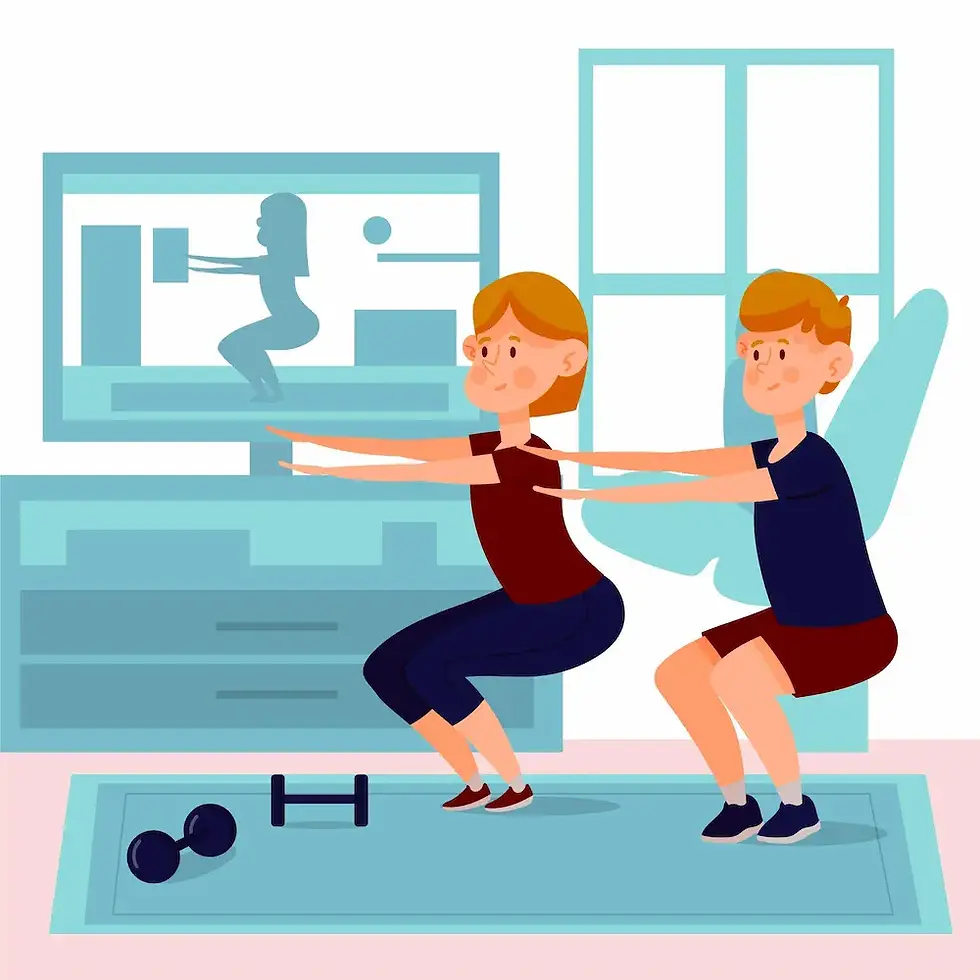
Squats strengthen quads, hamstrings, and glutes for knee stability. Building a strong quadriceps reduces stress on the knee joint during prolonged activity, and engaging the adductors helps maintain proper knee alignment while running. Squats are the cornerstone of any knee-strengthening routine for runners.
1. Stand with your feet shoulder-width apart, with your toes pointed slightly outwards.
2. Push your hips back and slowly bend your knees, ensuring they track over your toes.
3. Lower yourself until your thighs are at least parallel to the ground, keeping your chest up and your back straight.
4. Drive through your heels to return to the starting position, extending your hips and knees simultaneously.
5. Perform 3 sets of 10 to 15 repetitions.
Variation: Try a weighted squat holding a dumbbell close to your chest, or a sumo squat with feet beyond hip width and toes pointed outward.
2. Lunges
Targets: Quads, Hamstrings, Glutes, Calves
Lateral lunges strengthen muscles around the knee and improve stability, while forward lunges train single-leg knee stability and proper alignment. For runners, lunges are especially valuable because they closely mimic the mechanics of the running stride and challenge coordination and core control at the same time.
6. Stand with your feet hip-width apart, hands at your sides.
7. Step your left leg forward, keeping your right foot in place, and bend both knees to a 90-degree angle.
8. Your front knee should be directly above your ankle, and your back knee should hover just above the floor.
9. Push through the heel of your left foot to return to the starting position.
10. Repeat 10 times, then switch legs.
Variation: Reverse lunges improve balance and stability through the knee joint. Step backwards instead of forward to shift emphasis onto the glutes and reduce forward knee strain.

3. Step-Up with Knee Drive
Targets: Quads, Glutes, Hip Flexors, Balance
Step-ups enhance quad and glute strength for better knee stability while improving single-leg control. By driving the knee up at the top of the movement, this exercise also builds hip flexor strength and coordination, training the mechanics of the running stride directly. It is one of the best exercises for runner's knee prevention.
11. Stand with your feet hip-width apart in front of a box, bench, or step.
12. Place your left foot fully on the platform and drive your right knee up toward your chest at a 90-degree angle.
13. Slowly lower your right foot back to the floor and step down.
14. Repeat for 10 repetitions, then switch legs.
Progression: Hold a dumbbell in the hand on the same side as the stepping leg to increase difficulty.
4. Single-Leg Glute Bridge
Targets: Glutes, Hamstrings, Core, Hip Stability
The single-leg glute bridge strengthens the glutes, hamstrings, and core, helping stabilise the pelvis and reduce stress on the knees during running. Hip stability is crucial for proper knee alignment: when the glutes are weak, the knees tend to collapse inward (knee valgus), which is a leading cause of runner's knee and sprained knee. This exercise can be done at home with no equipment.
15. Lie on your back with your knees bent and your feet flat on the floor, hip-width apart.
16. Extend your right leg straight, keeping your right foot just off the floor.
17. Push through your left foot to slowly lift your hips into a bridge position, forming a straight line from your shoulders to your left knee.
18. Hold for one second at the top, squeezing your glutes.
19. Return to the starting position and complete 10 repetitions, then repeat on the other leg.
Goal: Aim to build up to holding the top position for 20 to 30 seconds on your weaker side, which research links to a significantly lower injury risk in marathon runners.
5. Clamshells
Targets: Glute Medius, Hip Abductors, Knee Alignment
Clamshells strengthen the glute medius, one of the most important stabilising muscles for preventing knee injuries in runners. A strong glute medius prevents the knees from collapsing inward during the stance phase of running, correcting knee valgus and improving stride efficiency. Clamshells strengthen hip abductors and improve knee alignment, making them an essential runner's knee exercise.
20. Lie on your left side with your legs stacked and your knees bent at 90 degrees, hips at roughly 45 degrees.
21. Keep your feet together and open your top leg like a clam, rotating through the hip so your right knee points toward the ceiling.
22. Squeeze your glutes and pause at the top.
23. Slowly lower your top leg back down and repeat 15 times.
24. Switch sides and repeat on the other leg.
Progression: Loop a resistance band around your thighs just above the knees for added resistance as you get stronger.
6. Single-Leg Decline Squat
Targets: Quads, Patellar Tendon, Knee Stability
The single-leg decline squat is one of the most effective exercises for loading the patellar tendon (the tissue connecting the kneecap to the shin bone) and reducing patellofemoral pain. By using a slant board, the exercise emphasises the eccentric lowering phase, which builds tendon strength and resilience, helping to alleviate pain and prevent runner's knee from recurring.
25. Stand on a slant board with one foot, holding the other leg slightly off the ground.
26. Engage your core and keep your chest tall.
27. Slowly bend your working leg, lowering into a squat as far as you can control, keeping your knee tracking over your toe.
28. Pause at the bottom, then place your non-working foot down for support and return to standing.
29. Aim for 3 sets of 8 to 10 reps per leg, building up gradually.
No slant board? Improvise with a wooden plank on the edge of a step, stacked weight plates, or a sturdy yoga block.
7. Spanish Squat with Resistance Band
Targets: Quads, Patellar Tendon, Knee Alignment
The Spanish squat is a knee-friendly, quad-focused exercise that uses a resistance band to keep the shins vertical, putting the emphasis squarely on the thigh muscles rather than the knee joint. It promotes proper alignment throughout the movement and is an ideal choice for runners experiencing knee pain who cannot yet tolerate deeper squats.
30. Loop a resistance band of moderate to heavy resistance around a sturdy anchor at knee height. Step into the band so it sits just below your knees.
31. Stand with your feet shoulder-width apart, toes facing forward, far enough from the anchor that the band feels taut.
32. Push your hips back and slowly bend your knees, keeping your chest upright and your shins as vertical as possible.
33. Lower until your thighs are roughly parallel to the floor, feeling the tension in your quads.
34. Hold at the bottom for 1 to 2 seconds, then press through your heels and drive your knees into the band to return to standing.
35. Perform 3 sets of 8 to 12 reps.
Tip: The band naturally trains proper knee alignment. If your knees are drifting inward, the band will let you feel and correct it in real time.
8. Lateral Monster Walks
Targets: Gluteus Medius, Hip Abductors, Hip Stability
Lateral monster walks target the gluteus medius for hip stability, directly addressing one of the main muscular contributors to runner's knee. Weak hip abductors allow the pelvis to drop and the knees to cave inward with each stride. Adding lateral monster walks to your exercise program helps correct this pattern, reducing knee strain and improving running economy.
36. Place a resistance band around your legs just above the knees or around your ankles.
37. Stand with your feet shoulder-width apart and your knees slightly bent, keeping your chest up.
38. Take a wide step to your right with your right foot, then bring your left foot in so your feet are back to shoulder width apart.
39. Continue stepping to the right for 10 to 15 steps, keeping constant tension in the resistance band.
40. Reverse direction and walk back to the left for the same number of steps.
41. Perform 2 to 3 sets in each direction.
Key point: Keep your knees aligned over your toes throughout. Do not let your feet come close enough together to release the tension in the band.

9. Hamstring Curl
Targets: Hamstrings, Knee Joint Stability
Strong hamstrings balance quad strength and protect the knee joint. For runners, they also absorb more shock from each foot strike, reducing the load transmitted through the knee. The hamstring curl is a targeted isolation exercise that directly strengthens this crucial muscle group. A resistance band version can be done at home if you do not have gym access.
42. Place a dumbbell vertically on the floor. Place one foot on either side of it and lower into a prone position, with your elbows and hands beside your head.
43. Engage your glutes, flex your feet, and squeeze the dumbbell between your feet.
44. Bend your knees to slowly lift the dumbbell toward your glutes, squeezing your hamstrings throughout.
45. Hold for one second at the top, then slowly lower back down.
46. Repeat 10 times.
No equipment? Try hamstring walkouts: start in a glute bridge, then slowly walk your heels out until your legs are nearly straight, keeping your hips lifted, before walking them back in.
10. Wall Sits
Targets: Quads, Glutes, Endurance
Wall sits build endurance in the quads and glutes, training these muscles to sustain effort over time rather than just produce peak force. For runners, this muscular endurance is critical: it is late in a run, when fatigue sets in, that knee strain most often occurs. Building the capacity to maintain proper knee alignment under fatigue is one of the most practical things you can do for knee health.
47. Stand with your back against a smooth wall and your feet shoulder-width apart, about two feet from the wall.
48. Slide your back down the wall, bending your knees until your thighs are parallel to the floor and your knees are at a 90-degree angle.
49. Keep your back flat against the wall and do not let your knees go past your toes.
50. Hold this position for as long as you can, aiming to gradually increase your time week by week.
51. Perform 2 to 3 sets.
Progression: Place an exercise ball between your back and the wall for smoother movement, or hold a kettlebell close to your chest for added resistance.
What Exercises Help Runner's Knee?
The most effective exercises for runner's knee are those that strengthen the muscles supporting the knee joint from all directions. Exercises for runner's knee should target the quads (which cushion the knee from the front), the glutes and hip abductors (which control inward knee collapse), and the hamstrings (which stabilise from behind).
Runner's knee exercises that deliver the most consistent results include single-leg glute bridges, clamshells, step-ups, and the Spanish squat. These exercises for runners collectively address the most common muscular deficits that lead to patellofemoral pain. If you are currently experiencing knee pain, start with low-load versions of each exercise and only progress when you can complete the movement without putting pressure on the painful area.
Alongside runner's knee exercises, additional strategies can help alleviate pain and support recovery. Kinesiology tape applied around the kneecap can reduce knee strain during activity.
A gait analysis from a physiotherapist or specialist running shop can identify technique issues such as knee valgus or overpronation. Proper footwear suited to your foot type absorbs impact and maintains joint alignment with every stride.
How Often and How Much?
Perform knee strengthening exercises 2 to 3 times per week. Treat each session as part of your cross-training and avoid doing leg resistance work on the same days as your hardest runs. Start with one or two sets of each exercise and gradually increase the number of repetitions by no more than 10% per week.
Most runners begin noticing changes within two weeks of starting a consistent knee-strengthening routine. Strength gains accumulate over months, so patience and consistency matter more than the intensity of any single session. The goal is to build a foundation of knee stability that holds up through long runs, speed sessions, and the inevitable fatigue of race day.
Preventing Knee Pain: Beyond the Exercises
Preventing knee pain in runners goes beyond the exercise program itself. Here are the most important supporting strategies:
• Increase mileage gradually: never add more than 10% to your weekly distance. This gives the muscles, tendons, and cartilage around the knee joint time to adapt.
• Invest in proper footwear: running shoes matched to your gait and foot type absorb impact and maintain joint alignment. Replace shoes every 500 to 800 kilometres.
• Address form issues: reducing overstriding, correcting knee valgus, and maintaining an upright posture all reduce knee strain with every footstrike.
• Stay consistent with strength training: weak muscles around the knees increase injury risk. Even two sessions per week make a substantial difference over time.
• Listen to your body: sharp pain during runner's knee exercises is a signal to stop. Mild discomfort during rehabilitation exercises is often acceptable, but always work within your limits.
Frequently Asked Questions
How often should runners do knee strengthening exercises?
Aim for 2 to 3 sessions per week. Avoid doing leg resistance training on the same days as long runs or speed sessions to give your muscles adequate recovery time.
Can I do these exercises if I am currently experiencing knee pain?
Many runner's knee exercises can be done during a period of knee pain, as long as you stay within a pain-free or low-pain range. Start with the gentlest options such as clamshells, glute bridges, and seated leg raises. If pain persists or worsens, consult a physiotherapist before continuing.
How long before I see results?
Most runners notice improvements in knee stability and a reduction in knee pain within two to four weeks of consistent training. Meaningful structural strength gains take eight to twelve weeks. Gradual progression in mileage and form improvements helps prevent repetitive strain from returning.
Do I need gym equipment?
Most of the best knee strengthening exercises for runners can be done at home with just your bodyweight. A resistance band adds versatility and is inexpensive. Exercises such as the hamstring curl, leg press, and deadlift require gym equipment but are optional additions to a solid home-based routine.


Comments